Tudor Women of Power
The women who wielded wealth, influence and power in Tudor England
Dates: 4 - 10 January 2027
Early Bird Price: $99 (approximately £74.50, AUD 142.30, €88.10)
Regular Price: $119 (approximately £89.50, AUD 171.00, €105.90)
Early Bird price available until 13 November 2026
REGISTER NOW
What Did Power Look Like for a Tudor Woman?
When we think of powerful women in Tudor England, our thoughts naturally turn to queens: Catherine of Aragon, Anne Boleyn, Mary I, Elizabeth I and Mary, Queen of Scots.
But what about the women who weren't queens?
 That's what I want to explore in Tudor Women of Power, because I've chosen several women who had very different kinds of power and influence, and some of them aren't women who immediately spring to mind when we think about power in Tudor England.
There's Bess of Hardwick, who became one of the wealthiest women in England and worked incredibly hard to secure her family's future. Blanche Parry spent decades close to Elizabeth I and had something courtiers desperately wanted: access to the queen. The Cooke sisters were extraordinarily well educated women who were involved in the intellectual, religious and political networks of Elizabethan England, while Mary Sidney was a writer, translator and literary patron in her own right.
Then we have Katherine Willoughby, wealthy, outspoken and so committed to her Protestant faith that she eventually fled Mary I's England, and Gertrude Courtenay, whose royal blood and family connections put her dangerously close to the dynastic and religious politics of Henry VIII's reign.
And that's what interests me about putting these women together.
They weren't powerful in the same way.
For one woman, wealth and property could give her considerable independence and influence. For another, it might be education, family connections or religious patronage. And for someone like Blanche Parry, being trusted by the queen and having access to her could make her an important person to know.
So during our seven days together, I want us to look at these women, go back to the contemporary sources and ask what power actually meant for a Tudor woman.
How much did birth matter? What difference did money make? How important were marriage and family? Could education give a woman a voice she might not otherwise have had? And just how valuable was access to the monarch?
I have a feeling we may all have different answers by the end of the week!
Your Ticket Includes
- 6 brand-new pre-recorded video talks
- Downloadable transcripts of all 6 talks
- 2 pre-event Zoom gatherings
- 7 live Zoom Q&A and discussion sessions during event week
- Recordings of the event-week Zoom sessions
- Recommended reading and resources
- Access to the private event Facebook group
- Lifetime access to the talks and event-week recordings
The six main talks will be pre-recorded, so you can watch them at a time that suits you rather than having to spend an entire week glued to your computer.
Each day of the event, we'll also meet live on Zoom to discuss the previous day's woman, ask questions, explore points raised by the talk and follow whatever interesting Tudor rabbit holes our discussion takes us down.
And before the main event begins, we'll have two pre-event gatherings to meet each other and start thinking about the question at the heart of the week:
What did power actually look like for women in Tudor England?
Meet the Tudor Women of Power
Day 1 - Katherine Willoughby: The Duchess Who Defied Mary I
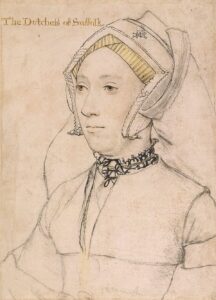 Katherine Willoughby was wealthy, aristocratic, outspoken and fiercely committed to her religious beliefs.
As the young heiress who became the ward - and later the wife - of Charles Brandon, Duke of Suffolk, she found herself at the heart of Henry VIII's court. She knew Catherine Parr, embraced evangelical reform and used her wealth and position to support the religious causes in which she believed.
But the accession of the Catholic Mary I transformed Katherine's position.
Rather than conform, Katherine and her second husband, Richard Bertie, fled England, beginning an extraordinary period of exile on the Continent.
We'll follow Katherine from wealthy heiress and Tudor duchess to religious patron and exile, examining her beliefs, her relationships, her influence and the choices she made when faith and royal authority came into direct conflict.
Day 2 - Gertrude Courtenay: Dynasty, Religion and the Exeter Conspiracy
Gertrude Courtenay stood dangerously close to the Tudor throne.
Married to Henry Courtenay, Marquess of Exeter, she belonged to a family whose royal blood made them both important and potentially threatening to Henry VIII.
Gertrude supported Catherine of Aragon and Princess Mary, became associated with conservative religious networks and lived through the increasingly dangerous political and religious atmosphere of the 1530s.
Then came the so-called Exeter Conspiracy.
Her husband was arrested and executed. Gertrude herself was imprisoned.
We'll examine Gertrude's beliefs, relationships and networks, the evidence used against the Courtenays and the extraordinary dangers of possessing royal blood in Henry VIII's England.
I also want to look at Gertrude herself because she can all too easily disappear from the story behind her husband.
Day 3 - The Cooke Sisters: Tudor England's Extraordinary Learned Women
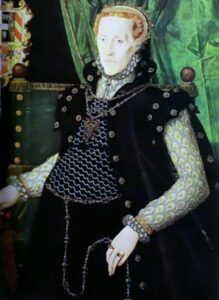 What could education give a Tudor woman?
Sir Anthony Cooke's daughters received an education extraordinary even by the standards of the Tudor elite. They became accomplished linguists, translators, writers, religious thinkers and patrons.
Mildred Cooke Cecil married William Cecil, Elizabeth I's chief minister. Anne Cooke Bacon became the mother of Francis Bacon and a formidable scholar and translator in her own right. Elizabeth Cooke Hoby Russell was a writer, patron and determined defender of her family's interests.
They're often introduced through the famous men in their lives, but there's so much more to explore about the women themselves.
Through the Cooke sisters, we'll explore female education, classical scholarship, Protestantism, marriage, motherhood, correspondence, patronage and the intellectual networks that connected highly educated women with the political and religious world of Elizabethan England.
Day 4 - Bess of Hardwick: Marriage, Money and the Making of a Dynasty
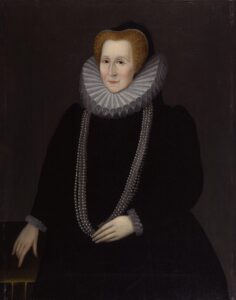 Bess of Hardwick's story is quite extraordinary. She was born into a relatively modest gentry family, married four times and ended up Countess of Shrewsbury and one of the wealthiest women in England.
But Bess's story is not simply the story of four advantageous marriages.
She became a formidable manager of estates and property, a builder, a dynastic strategist and the creator of an extraordinary material legacy that can still be seen at Chatsworth and Hardwick Hall.
Her life also brought her into the world of Mary, Queen of Scots, whose long custody helped place enormous strain on Bess's marriage to George Talbot, Earl of Shrewsbury.
We'll examine how Bess acquired wealth, how she protected and deployed it, how she planned for her descendants, and how a Tudor woman could use marriage, property and family to create power of her own.
Day 5 - Blanche Parry: Power in the Queen's Privy Chamber
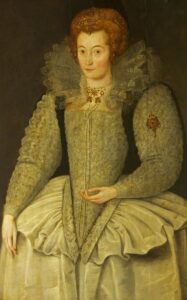 What if power came not from great wealth or royal blood, but from access?
Blanche Parry served Elizabeth I for decades and occupied a position of extraordinary trust within the queen's household.
Her responsibilities brought her into close contact with Elizabeth, her possessions and jewels, petitioners, courtiers and the networks of patronage that surrounded the monarch.
We might look at Blanche's role and think of it as a domestic one, but being that close to the queen, and being trusted by her, gave Blanche something incredibly valuable: access.
Through Blanche's long career, we'll explore her position in Elizabeth's household, her family connections, the networks that developed around her and the way she chose to commemorate her own life and relationship with Elizabeth.
Day 6 - Mary Sidney: Poet, Translator and Patron
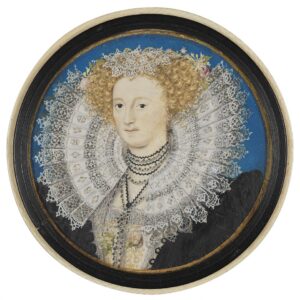 Mary Sidney is still too often introduced as Sir Philip Sidney's sister, which is rather frustrating when you look at everything she did herself.
Countess of Pembroke, writer, translator, literary patron and highly educated noblewoman, Mary became an important figure in the cultural world of late Elizabethan England.
She worked on the Sidney Psalms, promoted her brother's literary legacy and produced significant work of her own.
Through Mary, we'll look at what writing, scholarship and patronage could allow an elite Elizabethan woman to do, and at her own contribution to the literary world of the period.
Day 7 - Who Was the Most Powerful?
Our final live gathering brings all of the stories together.
We'll begin with questions and discussion on Mary Sidney before going back to where we started and thinking about what power actually looked like for a Tudor woman. After spending the week looking at royal blood, wealth, property, education, religion, family connections and access to the monarch, have any of our ideas changed?
And, after spending a week with Katherine, Gertrude, the Cooke sisters, Bess, Blanche and Mary:
Who do you think was the most powerful woman we encountered - and why?
Before the Event
We won't have to wait until January to start talking Tudor women.
Your ticket also includes two pre-event Zoom gatherings.
Saturday 5 December - Meet the Women
Time: 10pm UK / 5pm New York
A relaxed welcome gathering where I'll introduce our women, explain why I've chosen them and give you a taste of where we're going during the week.
Which woman do you already know most about?
Which is completely new to you?
Which story are you most looking forward to exploring?
It's also a chance to meet fellow participants before the main event begins.
Saturday 12 December - What Gave a Tudor Woman Power?
Birth - Marriage - Money - Education - Religion - Royal Access
Time: 10pm UK / 5pm New York
Which of these gave a Tudor woman the most power?
In this pre-event discussion, we'll think about the different ways a Tudor woman could acquire influence, how much depended on birth, marriage and family, and whether something less tangible, such as access to the monarch, could sometimes be just as valuable.
Keep your answers in mind because we'll come back to the same question at the end of Tudor Women of Power and see whether any of us have changed our minds.
Event Week: 4 - 10 January 2027
Monday 4 January
Katherine Willoughby: The Duchess Who Defied Mary I
Welcome Zoom gathering - 10pm UK / 5pm New York
Tuesday 5 January
Gertrude Courtenay: Dynasty, Religion and the Exeter Conspiracy
Live Katherine Willoughby Q&A and discussion - 10pm UK / 5pm New York
Wednesday 6 January
The Cooke Sisters: Tudor England's Extraordinary Learned Women
Live Gertrude Courtenay Q&A and discussion - 10pm UK / 5pm New York
Thursday 7 January
Bess of Hardwick: Marriage, Money and the Making of a Dynasty
Live Cooke Sisters Q&A and discussion - 10pm UK / 5pm New York
Friday 8 January
Blanche Parry: Power in the Queen's Privy Chamber
Live Bess of Hardwick Q&A and discussion - 10pm UK / 5pm New York
Saturday 9 January
Mary Sidney: Poet, Translator and Patron
Live Blanche Parry Q&A and discussion - 10pm UK / 5pm New York
Sunday 10 January
Live Mary Sidney Q&A
Final Tudor Women of Power discussion - 10pm UK / 5pm New York
Is Tudor Women of Power for You?
You certainly don't need to be an expert on these women. In fact, I'm hoping that part of the fun will be meeting women you may know only by name, or perhaps haven't come across at all.
If you already know your Tudor history well, there should be plenty here to get you thinking too. We'll be going back to contemporary sources, looking at what we actually know about these women and discussing different interpretations where the evidence allows us to do that.
And if you've joined me for one of my previous online events, the format will be familiar: recorded talks that you can watch when it suits you, live discussions where you can ask questions and share your own thoughts, and almost certainly a few Tudor rabbit holes that I haven't planned for!
Your Host

I'm Claire Ridgway, historian, author and Fellow of the Royal Historical Society.
I founded The Anne Boleyn Files in 2009 and have spent the years since researching, writing and speaking about Tudor history.
One of the things I particularly enjoy is moving beyond the familiar headline stories and looking at the people, relationships and networks that made Tudor England work. I'm particularly interested in women's lives, and not just those of the six wives and Tudor queens, so this event gives me the chance to spend time on women whose stories I find fascinating for very different reasons.
As with all my events, we'll go back to the contemporary evidence, explore different interpretations and leave room for uncertainty where the sources simply don't allow us to be certain.
And, of course, there will be plenty of opportunity for questions, discussion and Tudor rabbit holes along the way.
Frequently Asked Questions
Do I have to attend the Zoom sessions live?
No.
I know that participants join my events from all over the world and that the live time won't work for everybody.
The six main talks are pre-recorded, and the event-week Zoom sessions will be recorded and added to the event area for you to watch afterwards.
How long will I have access?
You will have lifetime access to the six recorded talks, transcripts and event-week Zoom replays.
How long are the talks?
I'm aiming for approximately 35-50 minutes per talk, although I won't cut off an interesting subject simply because a clock tells me to!
What happens at the Zoom gatherings?
They're a mixture of Q&A and discussion rather than additional lectures.
It's your opportunity to ask questions about the talks, explore points in more depth, share thoughts and occasionally take us off down an interesting Tudor rabbit hole.
You are very welcome to join in the discussion, but there's absolutely no pressure to speak or switch on your camera if you'd rather just listen.
I've attended one of your previous events. Is this new material?
Yes.
All of the Tudor Women of Power talks are being created specifically for this event.
There will naturally be some overlap in historical context - Tudor England was a very interconnected world - but these are six new talks focusing particularly on the different ways women acquired and exercised power.
I'm new to Tudor history. Is the event suitable for me?
Yes.
I've designed the event to have plenty of depth for people who already know Tudor history well, but you don't need specialist knowledge of these women before joining us.
I'll provide the context you need as we go.
What if I can't attend during event week?
That's absolutely fine.
Because the talks are pre-recorded and you have lifetime access to the event material, you can work through Tudor Women of Power at your own pace.
How will I access the event?
You'll receive information by email before the event begins explaining how to access the private event area, recorded talks and live Zoom sessions.
Join Me for Tudor Women of Power
I'd love you to join me in January for seven days of Tudor women, historical sources, discussion and, I'm sure, plenty of research rabbit holes.
We'll get to know Katherine Willoughby, Gertrude Courtenay, the Cooke sisters, Bess of Hardwick, Blanche Parry and Mary Sidney, and by the end of the week I'd love to know whether your ideas about women's power in Tudor England have changed.
And, of course, I'll be asking you the question I've been asking myself while putting this event together:
Which of these women do you think was the most powerful, and why?
Early Bird Price: $99